Modern solvent cleaning systems are advanced vacuum systems that enable fully automated, safe, and efficient cleaning of components – especially in demanding industries such as automotive, aerospace, or medical technology. They operate in closed loops, allowing solvents such as modified alcohols, hydrocarbons, or perchloroethylene to be used safely and continuously recycled.
The systems are flexibly configurable and can be adapted to different component geometries, levels of contamination, and process requirements. Typical cleaning steps such as flood washing, vapor degreasing, ultrasonic cleaning, and drying run fully automatically – controlled via PLCs or industrial PCs with process monitoring and documentation.
A special feature of modern systems is the automatic preservation process, which can be carried out at the end of the cleaning cycle. A corrosion protection agent is applied to the cleaned components – either by spraying, flooding, or vapor injection. This ensures that the parts are immediately protected against environmental influences after cleaning and can be safely stored or transported without the need for manual post-treatment.
This integrated preservation saves time, reduces potential sources of error, and increases process safety – especially for components that are not processed immediately. The combination of cleaning and preservation in a single system makes modern solvent cleaning systems an important part of efficient manufacturing processes.
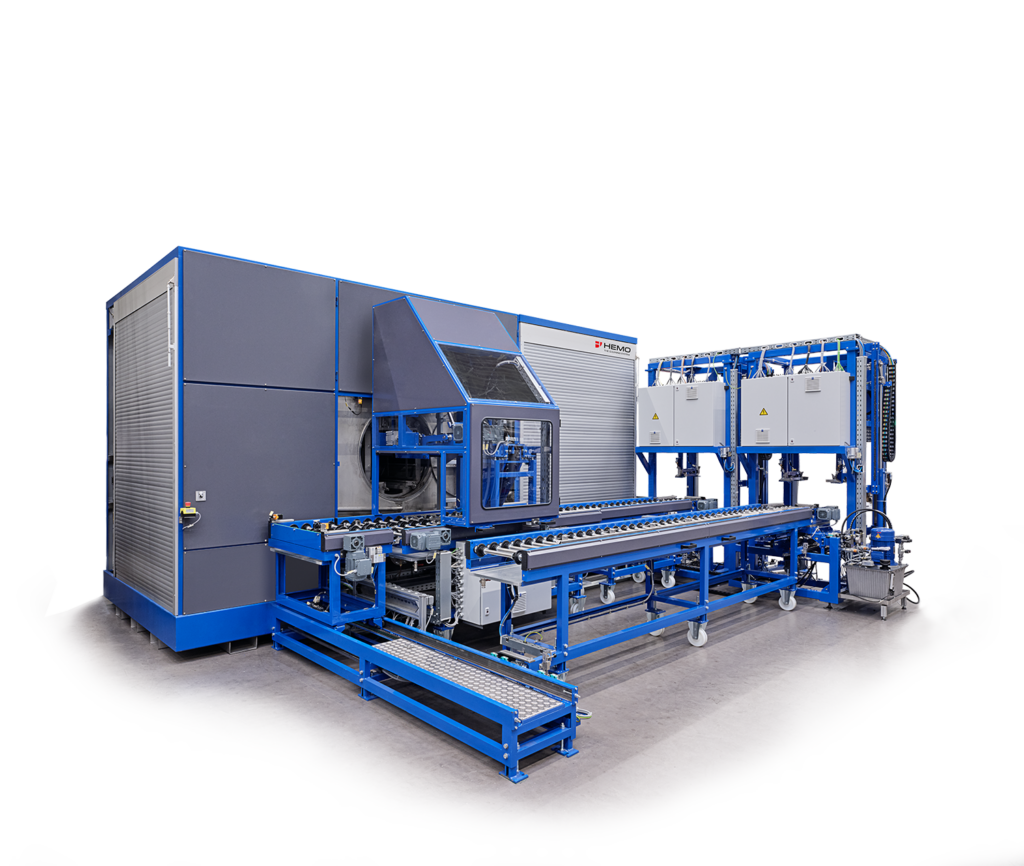
Practical example of a highly automated parts cleaning system for machined components with the highest demands on process safety, efficiency, and personnel relief.
An automated system for removing organic residues such as oils and greases using specialized solvents.
Modified alcohols, hydrocarbons, perchloroethylene – depending on the application and material.
Through flood washing, vapor degreasing, ultrasonic cleaning, and drying in closed systems.
The solvent circulates internally, is purified and recovered – without any emissions to the outside.
Fully automated via PLCs or industrial PCs with process monitoring and documentation.
Yes, they can be adapted to different components, levels of contamination, and processes.
Yes, for example, flood washing with ultrasonic treatment followed by vapor degreasing.
Depending on the system type, manually or automatically – as a top-loading or front-loading system.
Typically between 8 and 20 minutes, depending on the component, batch size, and level of contamination.
Yes, modern systems are also designed for heavy and bulky components.
An integrated process in which a corrosion protection agent is applied after cleaning.
By flooding, spraying, or vapor injection – depending on the system design.
It protects the cleaned components from corrosion during storage or transport.
Yes, modern agents are often thin-film and compatible with subsequent processes.
Yes, depending on the material, storage duration, and environmental conditions.
Yes, thanks to closed loops, solvent recovery, and low emissions.
Through distillation and filtration within the system.
Yes, for example, to limit emissions, ensure workplace safety, and regulate solvent use.
Yes, with proper handling and the use of closed systems.
Through integrated logging, batch tracking, and process data recording.