Modern cleaning systems in industrial parts cleaning increasingly rely on combined media handling to meet the highest cleanliness standards while maintaining high efficiency. Hybrid systems and BEYOND systems differ fundamentally in their process strategies.
In hybrid systems, solvents and aqueous media are operated separately in two independent circuits. Cleaning takes place in multiple steps: first, organic residues such as oils and greases are removed using solvents, followed by an aqueous cleaning step to eliminate inorganic contaminants like salts or particles. This separation allows for targeted media selection and process optimization but is associated with longer cycle times, as the media must be applied sequentially.
BEYOND systems, on the other hand, follow an innovative approach: here, solvents and water are used simultaneously within the same cleaning chamber. This parallel media handling allows both organic and inorganic residues to be removed in a single process step, significantly shortening batch times and increasing efficiency. The process is further enhanced by CNP technology (Cyclic Nucleation Process), which deliberately generates cavitation to remove even the finest contaminants from complex geometries—gentle on materials yet highly effective.
These systems are modular, highly automated, and particularly suitable for cleaning hybrid components, sensitive materials, and applications with the highest cleanliness requirements, such as medical technology, optics, semiconductor manufacturing, or aerospace. They combine maximum cleaning performance, short cycle times, and high process reliability in a single system.
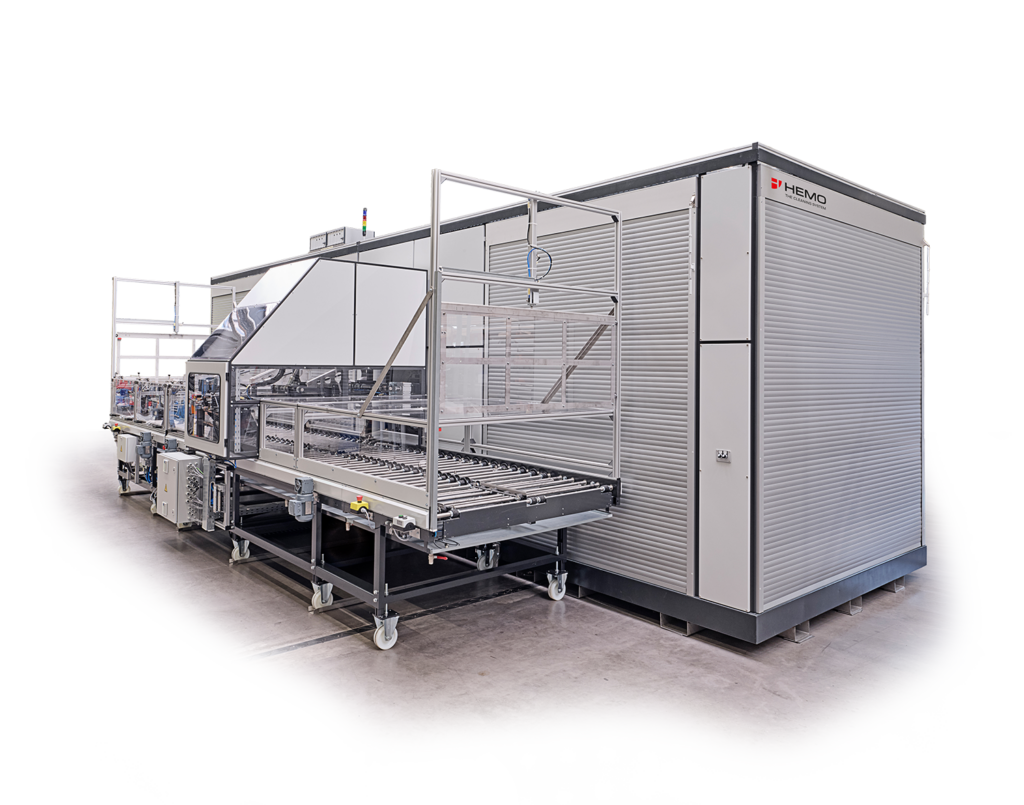
Practical example of a hybrid cleaning system for precision parts and tools with the highest requirements for particle-free cleanliness, process reliability, and cleaning quality.
A system that uses solvents and water in separate circuits to remove different types of contaminants.
An advanced system that uses solvents and water simultaneously in the same cleaning chamber.
A process for the controlled generation of cavitation that enhances cleaning performance and removes even the finest residues.
To efficiently remove both organic (oils, greases) and inorganic (salts, particles) contaminants.
Shorter cycle times and maximum cleaning performance through the simultaneous action of both media.
Solvent and water cleaning are carried out sequentially in separate process steps.
Both media act simultaneously in a combined cleaning step.
Hybrid, complex, and sensitive components with high cleanliness requirements and various organic and inorganic contaminants.
Yes, with proper parameter settings, CNP is gentle on materials and can be used universally.
Through particle measurement, residue analysis, microscopy, or surface inspection.
Yes, they operate in closed systems with process monitoring and solvent recovery.
Through distillation and filtration within the system.
Yes, through reduced media consumption, closed loops, and energy-efficient processes.
They are collected, processed, or disposed of properly.
Yes, they meet the highest cleanliness standards and are designed for cleanroom processes.
Depending on the application, up to 30–50 % shorter cycle times compared to hybrid systems.
Yes, through automated control and documented process parameters.
Completely – including loading, cleaning, drying, and preservation.
Modularly designed and adaptable to different components and requirements.
Medical technology, optics, semiconductor industry, aerospace, precision engineering.